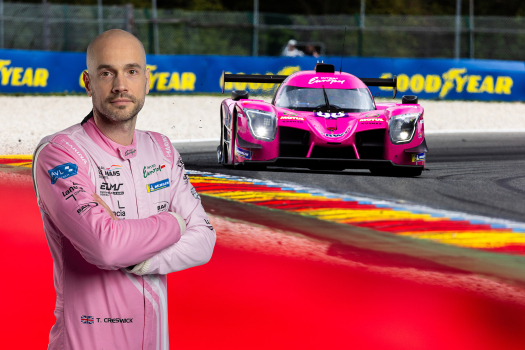
Opened in August 1921 the Circuit de Spa-Francorchamps is one of the oldest race tracks in the world but it has undergone many changes over the years from a 15km track on public roads to the 7km FIA Grade 1 circuit that the ELMS will use this weekend for the tenth time since 2016.

The origins of the circuit go back to 1919 after the First World War when the Eupen-Malmedy region was separated from Germany and became part of Belgium.
Newspaper owner Jules de Thier wanted to stage a race and, along with Baron Jospeh de Crawhez and racing driver Henri Langlois van Ophem, it was decided that the roads from Spa-Francorchamps to Malmedy and Stavelot formed the ideal layout.
The first car race was planned for August 1921 but was cancelled when only one entry was received, but a motorcycle race was held. The first car race was successfully held the following year and was followed by the first running of the Francorchamps 24 Hours in 1924 and the circuit hosted its first Grand Prix in 1925.

The original circuit was 14.982km (9.31 miles) and was a very fast circuit.To improve the average speed the Ancienne Douane uphill U-turn after Eau Rouge was removed in 1939 and a faster sweep was added and arguably the world’s most famous and challenging sequence of Eau Rouge-Raidillon was born. This shortened the lap slightly to 14.1km (8.7 miles) and this was the configuration that was used until 1978.
Up until 1979 Spa-Francorchamps was the fastest road circuit in Europe. However, over the years, as cars got faster, the number of fatal accidents started to climb as well, so something had to be done. In the final years of the old circuit, drivers could average 240 km/h (150 mph).

In 1979, to improve safety, the circuit was shortened from 14.1km to 6.947km, with the start finish line being moved from the downhill section before Eau Rouge to the straight before La Source in 1981.
The final major changes to the track happened in 2007 when the Bus Stop chicane was moved back towards Blanchimont and the La Source hairpin moved forward to allow space for the new pitlane complex. This meant the track length was extended slightly to the 7.004km (4.352 miles) lap that we use today.
Further improvements have been made to the runoff areas around the circuit, most notably at Eau Rouge and Raidillon and new grandstands have been added around the circuit.
The European Le Mans Series added Spa-Francorchamps in 2016 when the calendar was extended from five to six races and 2025 marks the 10th edition of the 4 Hours of Spa-Francorchamps.
CLICK HERE for more information on the history of the Circuit de Spa-Francorchamps.